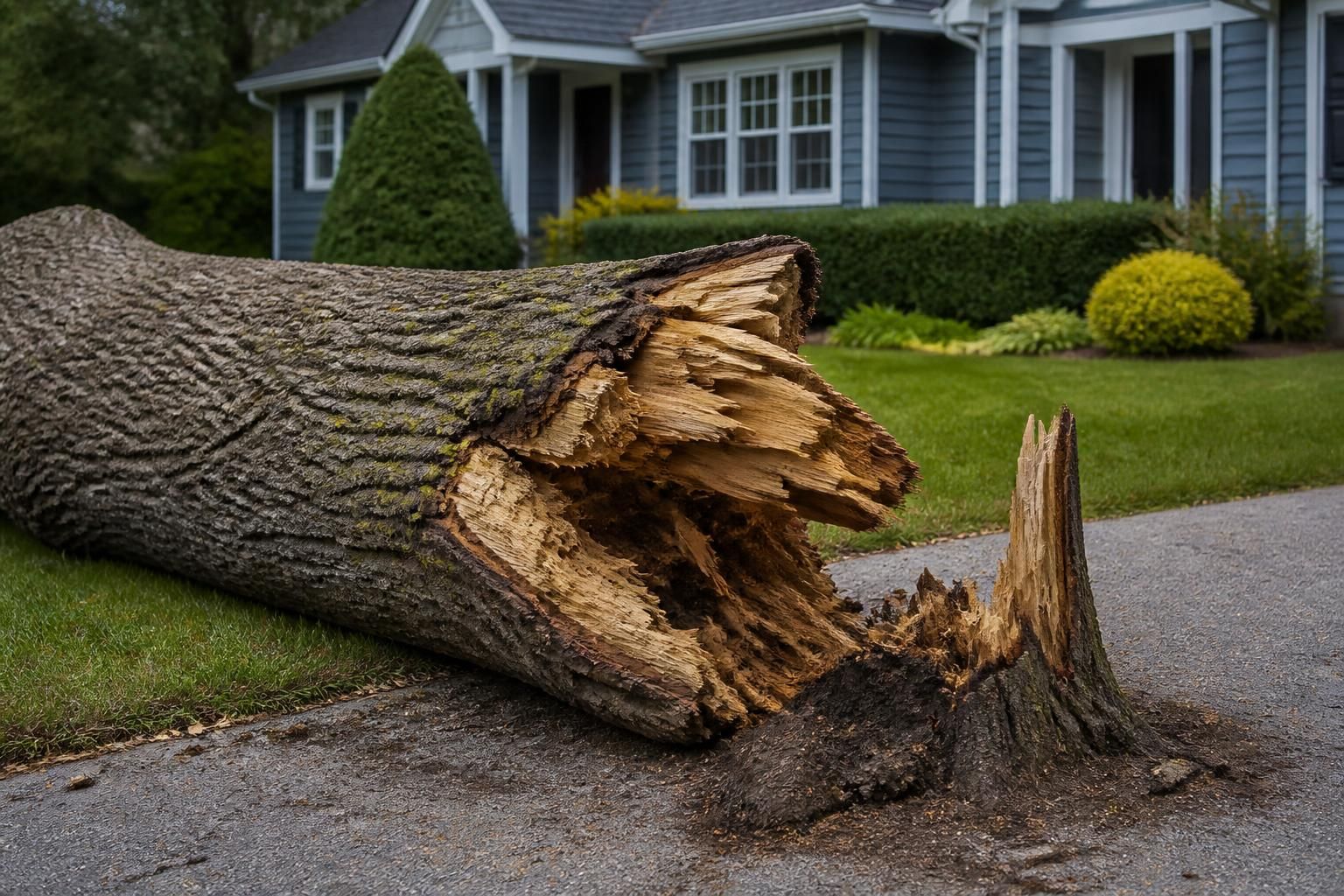
When a tree splits, leans, or drops heavy limbs after a storm, the damage can feel urgent right away. Branches may block a driveway, crush a fence, hang over a roof, or sit unstable after wind, rain, or lightning. If a tree on your Fort Mill, SC property is showing signs of failure, the next step is to get the hazard assessed and removed before it shifts again.
Emergency Tree Service Fort Mill handles storm damage tree removal for properties across Fort Mill, SC, including situations where trunks crack, roots loosen, or large limbs land where they should not. We clear damaged trees, broken branches, and storm debris with a focus on reducing further risk to your home, vehicles, walkways, and nearby structures.
Not every damaged tree falls all at once. Some trees remain standing while still becoming unsafe after a storm. A lean, split trunk, torn bark, or hanging limb can be the warning you see before the tree gives way.
Watch for these signs after strong weather moves through Fort Mill, SC:
If you notice one of these conditions, avoid standing under the tree and keep children and pets away from the area until the damaged section is removed.
Storm damage can leave behind more than one problem at a time. A tree may need full removal, or it may need a partial cleanup before the rest can be addressed. We handle storm-related removal work for a range of situations across Fort Mill, SC.
If the tree is still attached but unstable, removing one dangerous section may be the first step before the rest of the cleanup can move forward.
Storm-damaged trees often require a careful approach because the wood is stressed, cracked, or under pressure. A limb that looks still may shift once cut. A trunk that appears solid may break deeper than expected. That is why the removal process needs to be planned around the shape of the damage.
This process matters because a storm-damaged tree rarely behaves like a healthy one. The right removal order helps reduce extra damage during cleanup.
After a storm, a damaged tree can continue to fail even if it looked stable for a short time. A cracked branch may drop later. A leaning trunk may settle farther. A split root system may shift after the soil gets wetter.
Quick removal helps limit problems such as:
In Fort Mill, SC, storm-related tree damage can also interfere with daily routines fast. Clearing the hazard early gives you room to inspect the rest of the property and decide what else needs attention.
Storm cleanup is more than cutting the obvious branch and leaving the rest behind. A broken tree can scatter wood, bark, leaves, and smaller limbs across lawns and hard surfaces. Some debris is easy to miss until you try to mow, park, or walk through the area.
Emergency Tree Service Fort Mill can address the mess left after the main removal so the property is not left with half-cleared debris. Depending on what the storm did, cleanup may include:
That extra cleanup helps make the site safer to cross and easier to inspect once the damaged tree is gone.
Storm damage does not always look the same from one property to the next. Some trees snap near the trunk. Others split higher up and leave one side suspended. Sometimes the main problem is a single broken limb that is too heavy to leave hanging.
A trunk split can leave the tree unstable even when it remains upright. The split may widen with time or shift when the wood dries and settles.
Large limbs that hang after a storm can fall without warning. They are especially risky when they rest on another branch and keep pressure on the break point.
When the root plate lifts, the tree may be losing its hold on the ground. That can make the whole tree unsafe, even if only part of the canopy looks damaged.
Knowing the difference between these failures helps determine whether removal should be partial or complete.
We provide storm damage tree removal across Fort Mill, SC and nearby service areas, including Tega Cay, Lake Wylie, Pineville, Indian Land, Charlotte, Baxter Village, Riverview, Newport, Clover, York, and Rock Hill. If a storm has left tree debris or a dangerous lean on your property, we can help assess the next step and remove the hazard.
Some properties need fast clearing after a branch comes down across an entry point. Others need a larger removal when the tree has shifted and can no longer stand safely. Either way, the goal is the same: remove the danger and clear the way for your property to be used again.
If the tree has a deep split, a major lean, exposed roots, or a large hanging section, removal is often the safer choice. A damaged tree that is still standing can still fail later.
Sometimes it can, but only if the remaining structure is stable. The break point, trunk condition, and root movement all matter before deciding whether the tree can remain.
That situation needs careful handling because the tree may be supporting itself on the structure. Removing the wrong section first can shift the load and make the damage worse.
Yes. We remove damaged trees, broken limbs, brush, and other storm debris tied to the hazard so the area can be cleared more fully.
Yes. If the stump is left behind after the damaged tree is removed, stump grinding can help clear the remaining base from the property.
Yes. A tree may look standing while the trunk, roots, or major limbs are already failing. That is why a storm inspection matters before the tree is left alone.
If storm damage has left a tree unsafe on your Fort Mill, SC property, do not wait for the next strong gust to make the problem worse. Emergency Tree Service Fort Mill can remove damaged trees, broken branches, and storm debris with care for the surrounding property and the condition of the tree itself.
Call +18036206180 or email contact@EmergencyTreeServiceFortMill.com to request help with storm damage tree removal. Our hours are Monday through Saturday, 8:00 AM to 7:00 PM.
Get Help Fast
Tell us what happened, where the damage is located, and what kind of tree issue you are facing. We will help you determine the next step for urgent removal, cleanup, or hazard reduction.